Sometimes you go somewhere thinking you already know what the story is.
I went to Georgetown for the Wooden Boat Show.
That seemed simple enough.
Boats. Craftsmen. A historic waterfront. A camera.
Then it rained.
And somewhere between the wet streets, the smell of sawdust, the sound of power tools, and a few conversations I never expected to have, the story became something else.
A Different Georgetown
I’ve spent quite a bit of time in Georgetown this year.
The more I return, the more I realize this town doesn’t reveal itself all at once.
There is the Georgetown most people see from Highway 17. Then there is the Georgetown you find when you turn toward the waterfront, walk Front Street, look out across the Sampit River, and stay awhile.
The Wooden Boat Show brought thousands of people into that version of Georgetown.
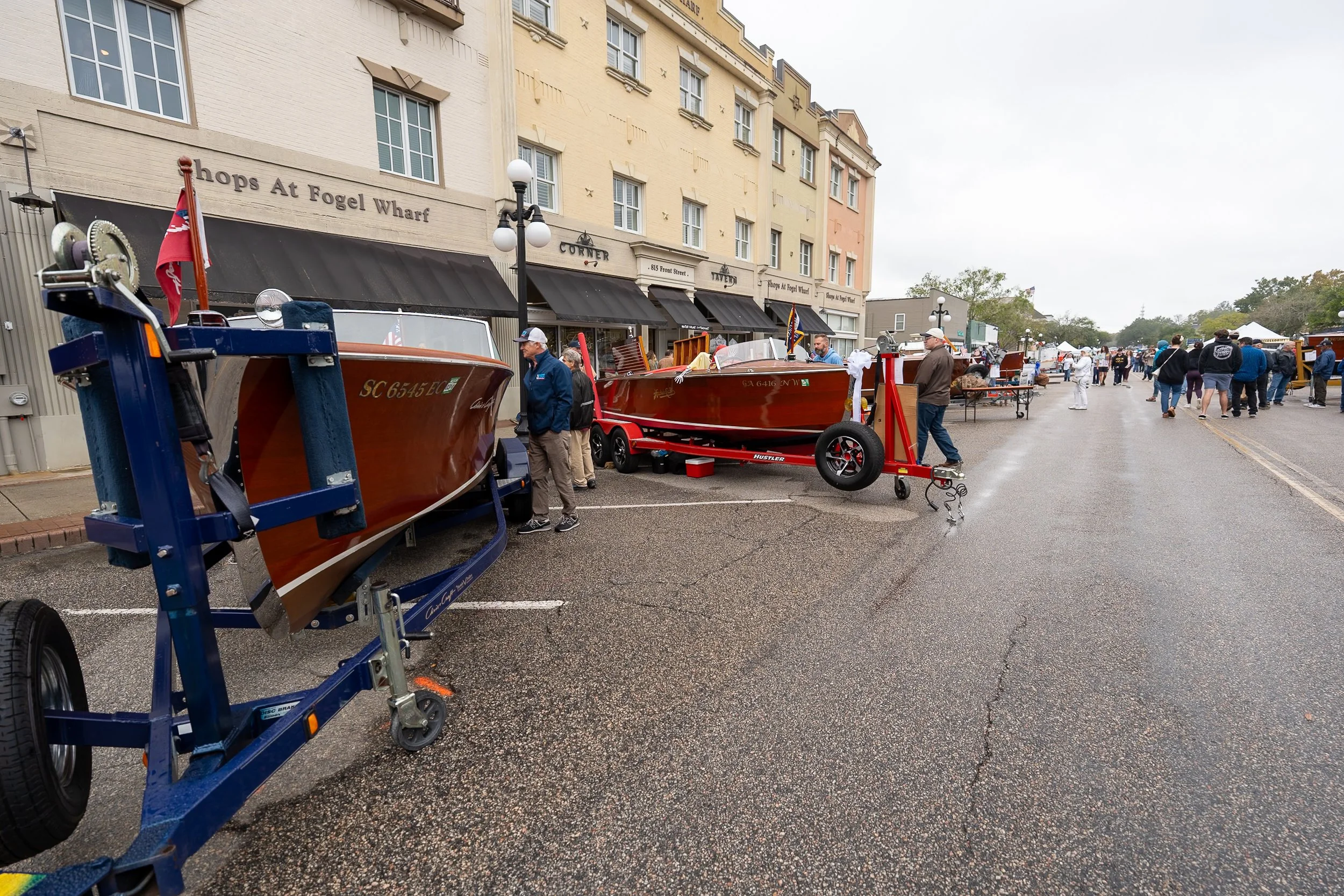
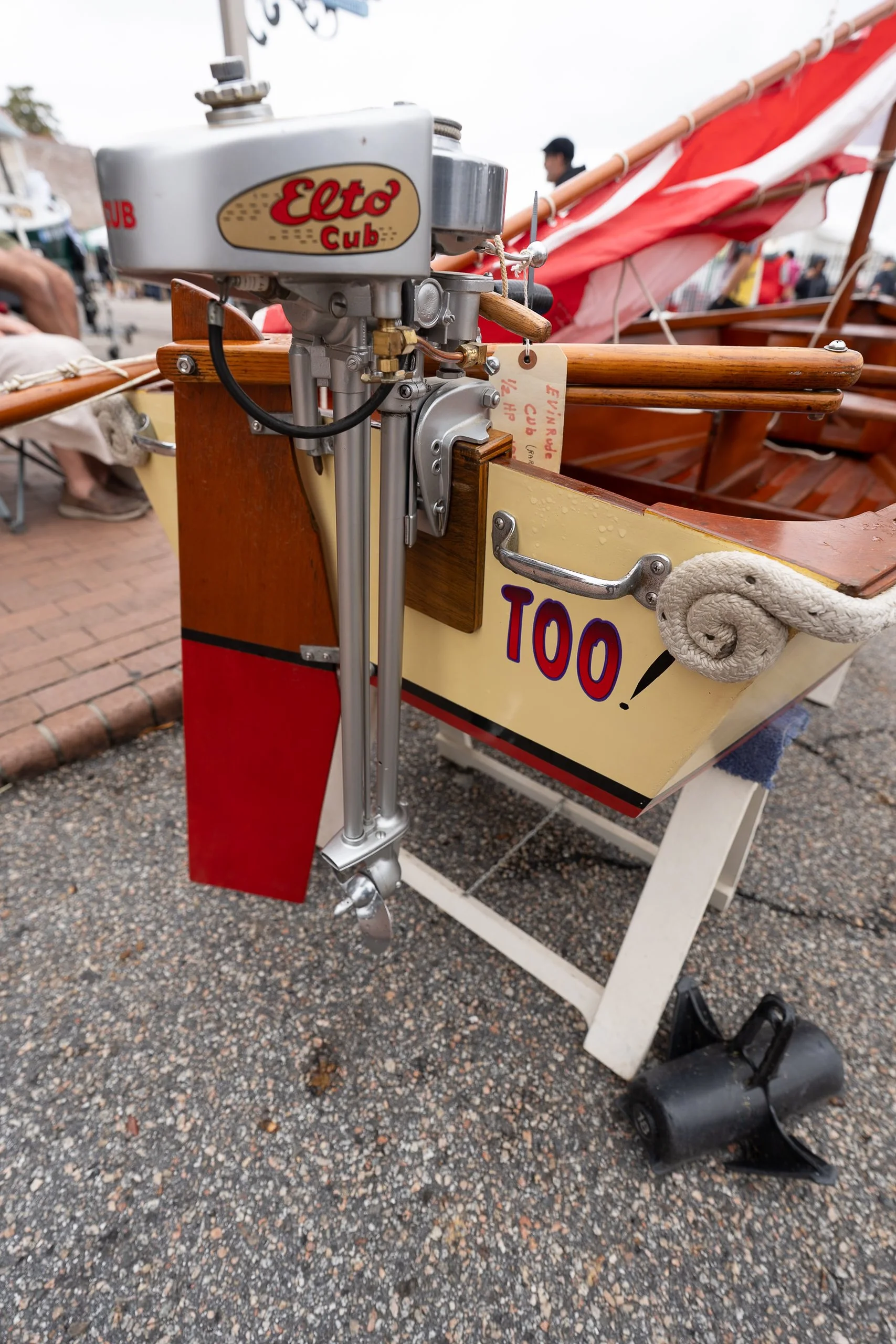
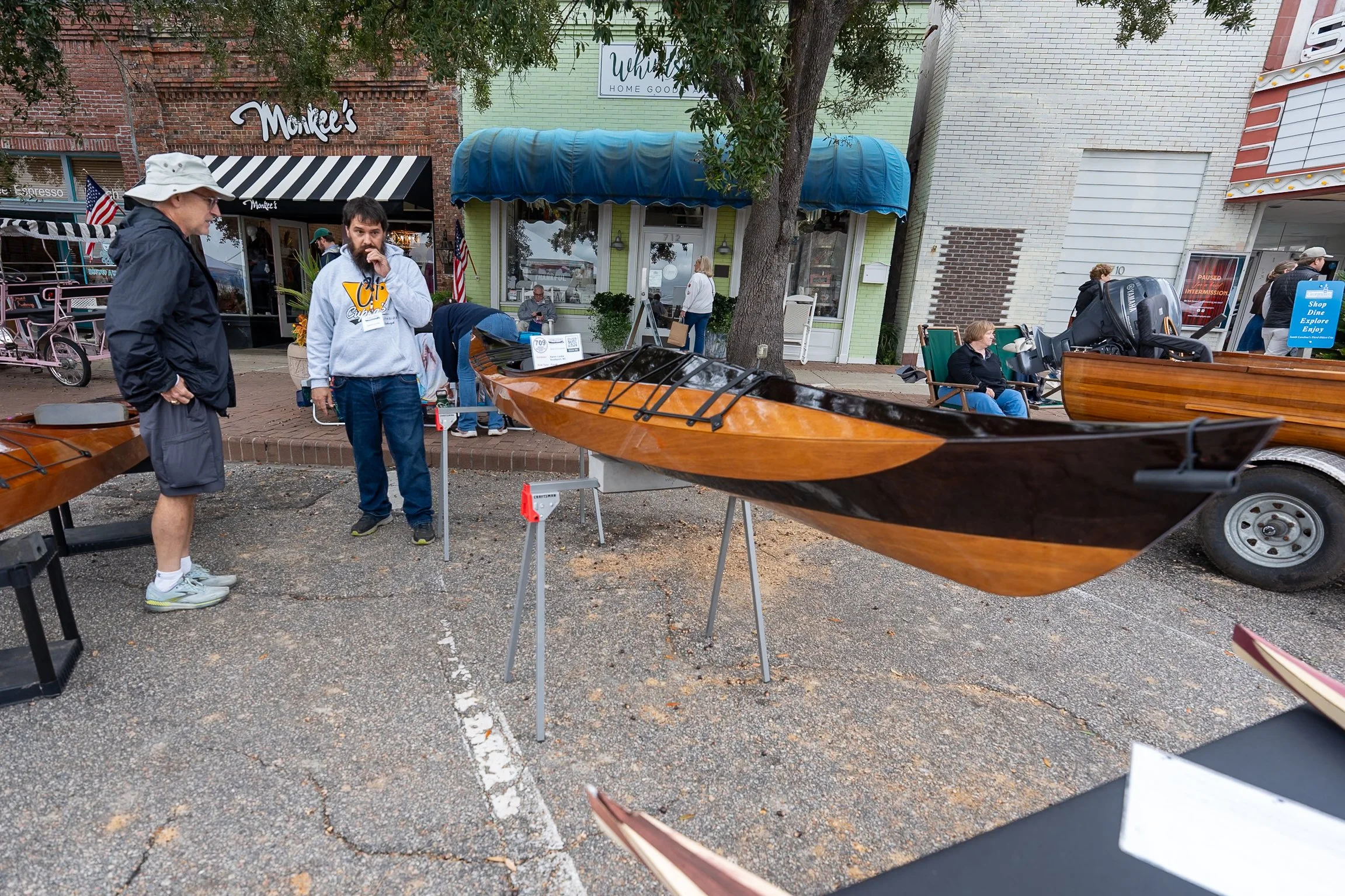
More than a hundred wooden boats lined the historic district and waterfront—restored classics, working boats, small craft, and boats built by people who clearly understand that wood has a personality all its own.
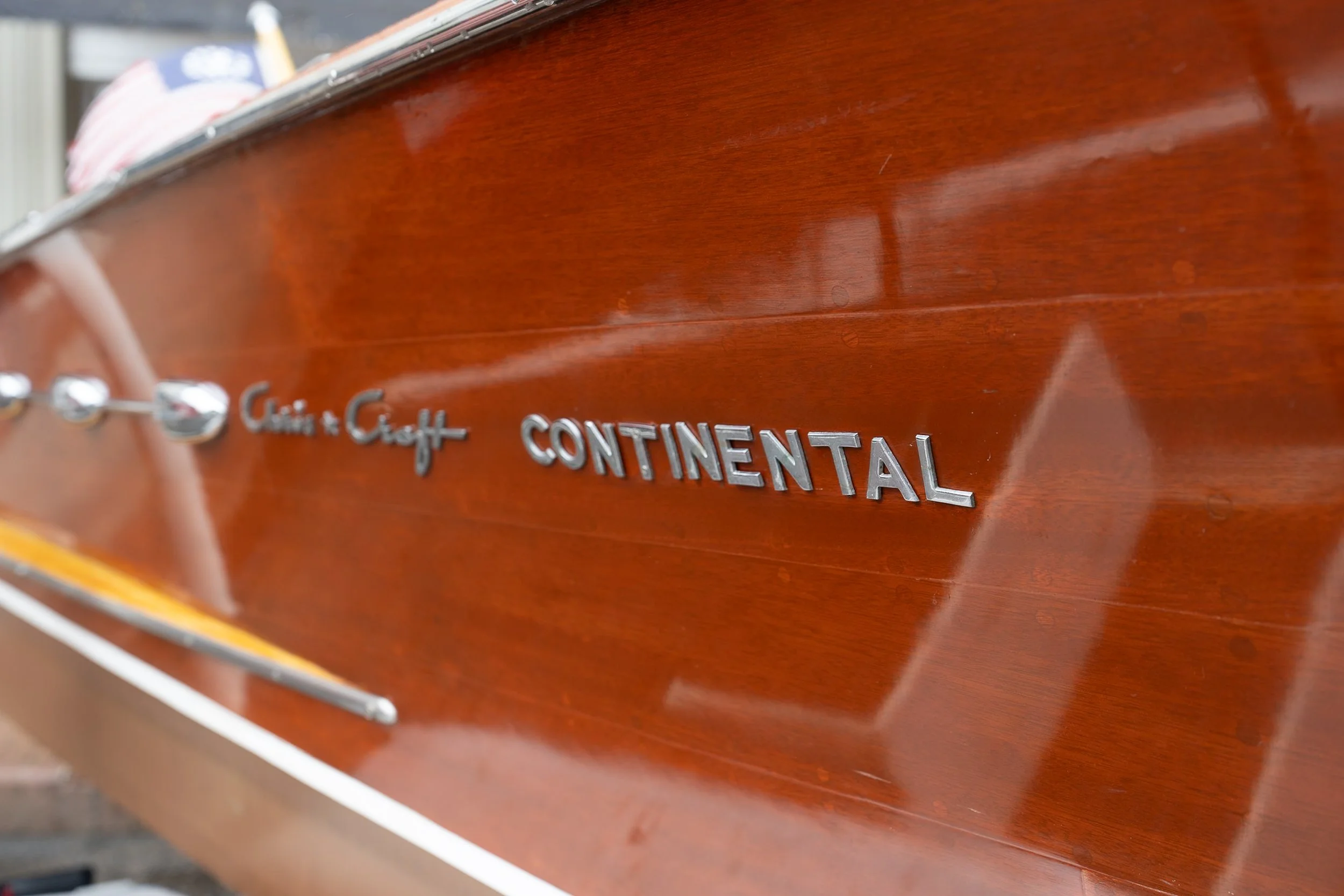
Some were polished nearly to perfection.
Others wore their years proudly.
I liked those.
Four Hours and a Pile of Lumber
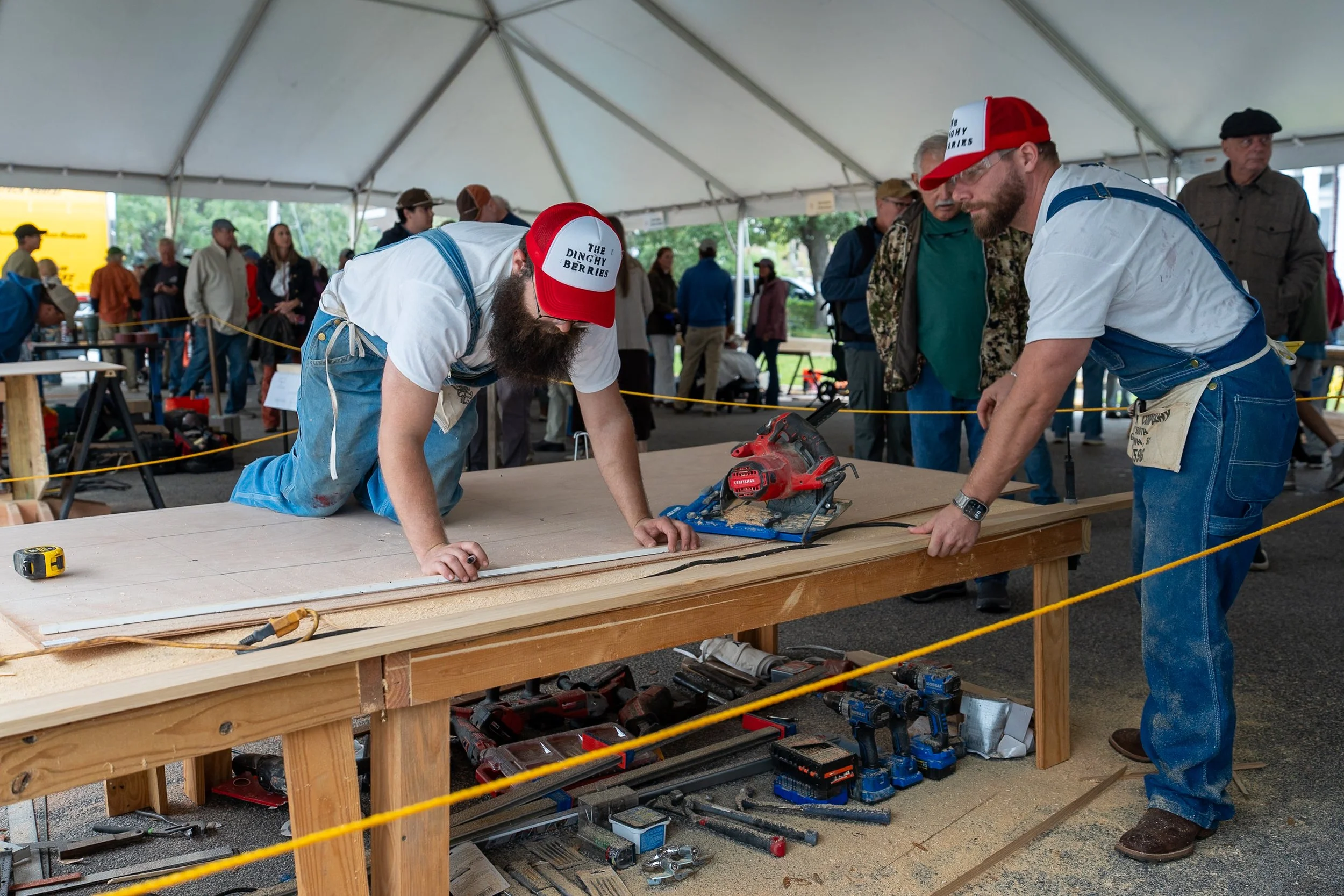
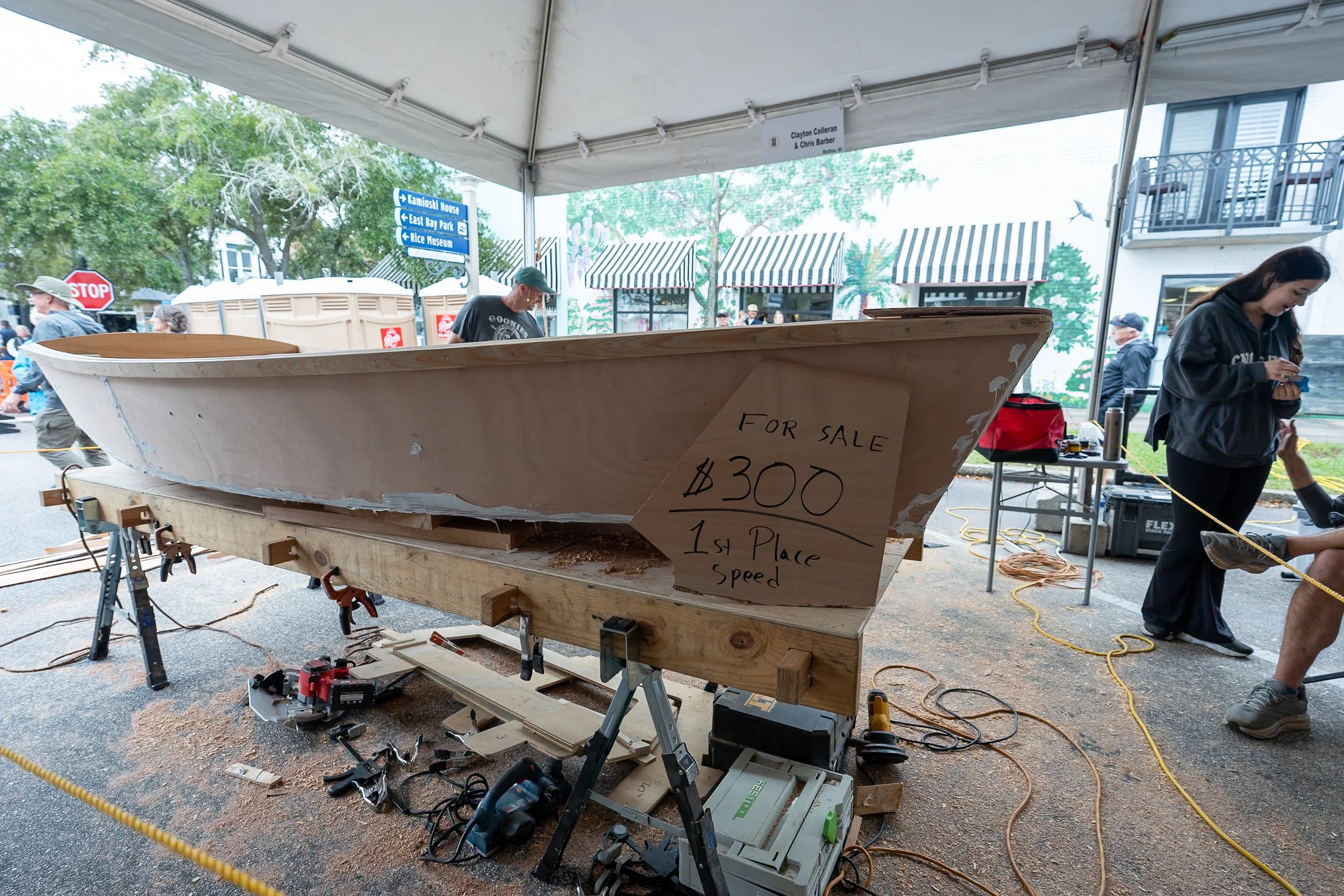
The part of the show I most wanted to see was the Wooden Boat Challenge.
Eight teams.
Four hours.
A standard pile of materials.
And at the end of it, they were expected to have a 12-foot Carolina bateau capable of actually floating.
There is something wonderfully direct about that.
No PowerPoint presentation. No committee meeting.
Just lumber, tools, a clock, and the understanding that eventually somebody has to climb into the thing you built.
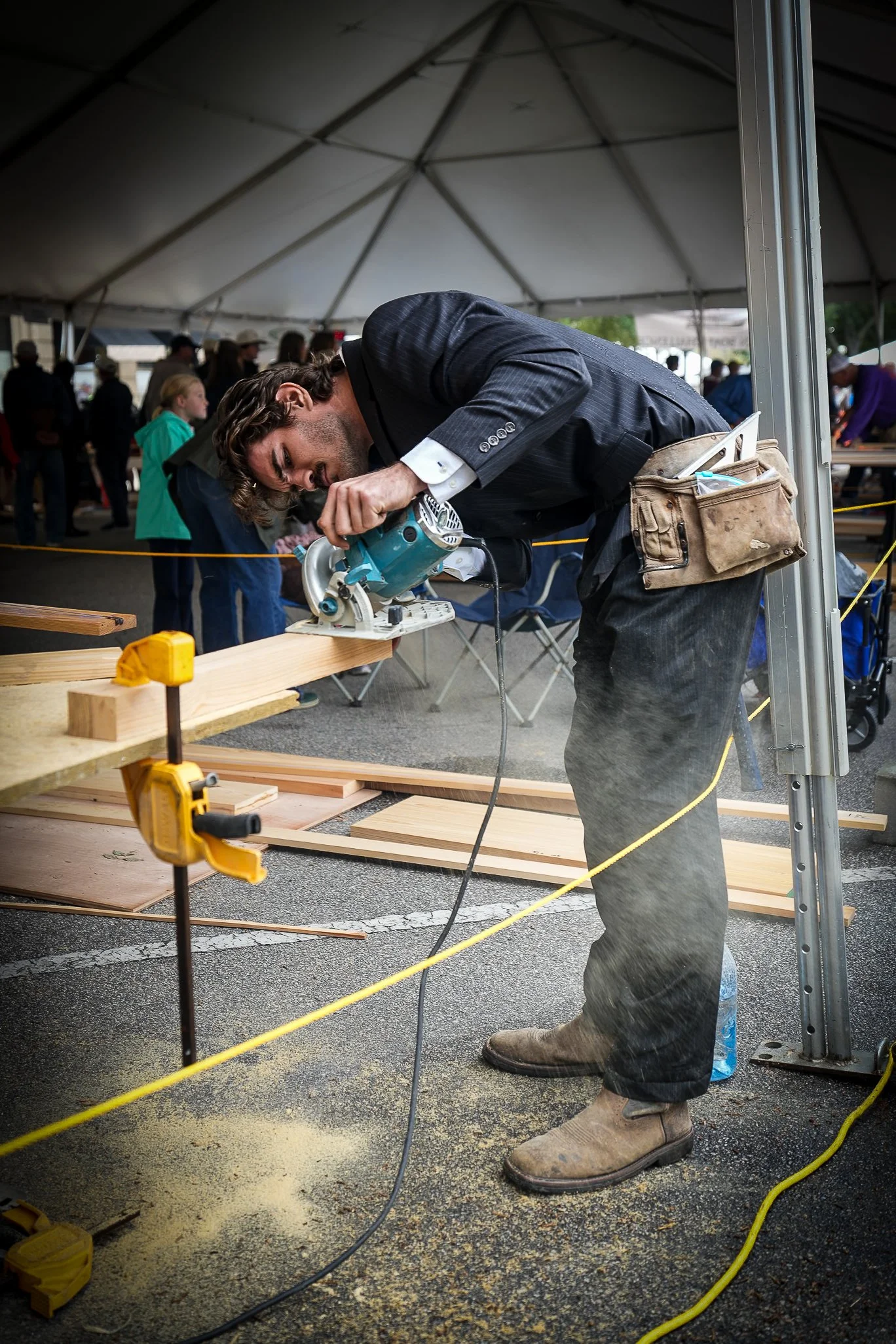
I watched teams measure, cut, drill, correct mistakes, improvise and keep moving.
Sawdust mixed with rainwater on the pavement.
People leaned over partially finished hulls while spectators gathered around them.
And slowly, boats began to appear.
Then they went into the Sampit River.
That was the test.
A boat can look beautiful sitting on the street.
The water gets the final vote.
The Story Starts to Change
The boats gave me plenty to film.
But some of the most interesting parts of the day happened when I wasn’t really looking for them.
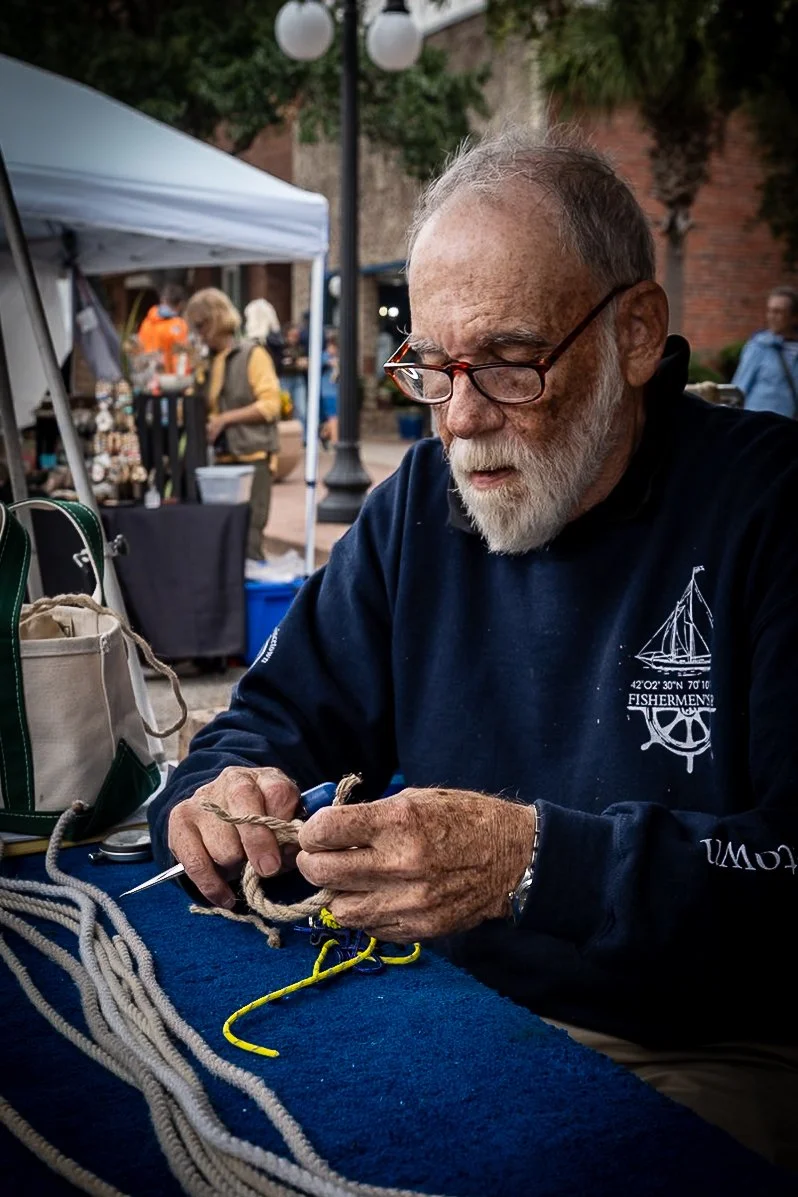
I met people.
I had conversations.
Two young freelance journalists stopped and talked with me about what I was doing. Later, inside Baxter’s Brewhouse, another conversation wandered toward Georgetown itself—the old steel mill property, small businesses, development, tourism and what this town might become in the years ahead.
And suddenly I was back inside a question I’ve been thinking about since I first started filming Georgetown:
How does an old place move forward without losing the parts of itself worth keeping?
That question is bigger than a boat show.
But oddly enough, the boats seemed to belong right in the middle of it.
Making Things. Keeping Things.
There is something almost defiant about building a wooden boat today.
There are easier materials.
Faster manufacturing methods.
More efficient ways to put a person on the water.
And yet people still shape wood.
They restore old boats.
They teach the skills.
They preserve designs that have survived because generations before them decided those designs were worth carrying forward.
Standing there watching those builders work, I started thinking about Georgetown in much the same way.
This is a town that has had to reinvent itself more than once.
Rice.
Lumber.
Paper.
Steel.
Tourism.
Each chapter leaves something behind.
Buildings. Stories. Scars. Traditions. People.
The question isn’t whether Georgetown will change.
It will.
Places always do.
The harder question is deciding what should survive the change.
The Story I Didn't Plan to Tell
When I first came to Georgetown months ago, it was mostly a name on a map.
Then I started walking its streets.
I visited Hampton Plantation and the Rice Museum. I learned more about the wealth created here, the enslaved people whose labor made much of that wealth possible, and the industries that came afterward.
I watched part of the old steel mill disappear.
I stood along the waterfront.
I watched kids learning to sail.
And gradually Georgetown stopped being a location.
It became a story about adaptation.
Maybe that is why the Wooden Boat Show stayed with me.
Because underneath the varnish, the craftsmanship and the competition was something very familiar.
People taking what they have inherited, working with their hands, making adjustments when things don’t quite fit, and trying to build something capable of staying afloat.
That sounds a lot like Georgetown.
Come to think of it, it sounds a lot like life.
I came for the boats.
I left thinking once again about the town around them.
And I have a feeling Georgetown still has more to say.
Watch my short film below to experience the Georgetown Wooden Boat Show, meet some of the people I encountered, and see how a story about wooden boats became something I never expected to tell.